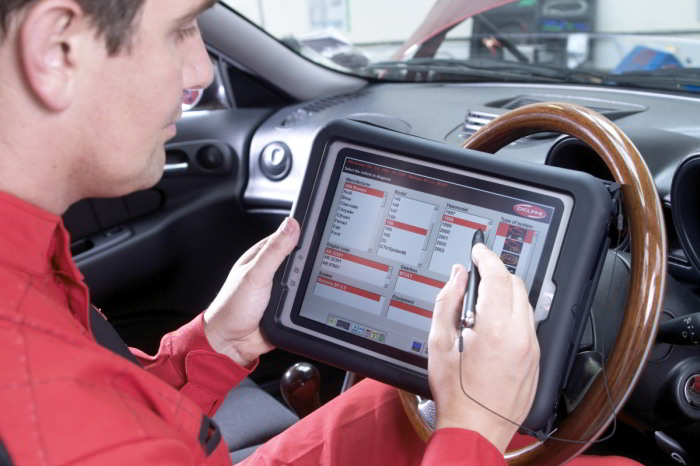
Modern vehicles are equipped with dozens of electronic control units (ECUs) that constantly monitor the performance of the engine, transmission, braking system, air conditioning, safety features, and many other components. When something isn't working correctly, these computers store valuable information that technicians can access using an OBD (On-Board Diagnostics) scanner.
At Euro Haus AutoCare, we use advanced computerized diagnostic equipment designed for BMW, Mercedes-Benz, Audi, Volkswagen, Porsche, Land Rover, Range Rover, Jaguar, Bentley, Maserati, Ferrari, Lamborghini, MINI, Volvo, and other premium vehicles. A professional diagnostic scan helps identify problems quickly, reducing unnecessary repairs and saving both time and money.
What Is an OBD Computerized Diagnostic Scan?
An OBD diagnostic scan is a communication process between your vehicle's onboard computers and a professional scan tool.
Every modern car sold worldwide includes an OBD-II (On-Board Diagnostics II) system. The scanner connects to the vehicle through the OBD port, usually located beneath the dashboard near the driver's seat.
Once connected, the diagnostic scanner retrieves information from multiple control modules, including:
- Engine Control Module (ECM)
- Transmission Control Module (TCM)
- ABS Control Unit
- Airbag Module (SRS)
- Body Control Module (BCM)
- Steering Module
- Climate Control Module
- Electronic Parking Brake Module
- Suspension Control Module
- Hybrid & EV Battery Management Systems (where applicable)
The scan provides a detailed health report of your vehicle's electronic systems.
How Does an OBD Scanner Work?
The process is straightforward but highly sophisticated.
Step 1: Connect to the OBD Port
The technician plugs the scanner into the vehicle's diagnostic connector.
Step 2: Establish Communication
The scan tool communicates with all available electronic control units using manufacturer-specific communication protocols.
Step 3: Read Stored Data
The scanner downloads fault codes, live sensor readings, freeze-frame information, adaptation values, software versions, and system status.
Step 4: Analyze the Results
A professional technician interprets the information rather than simply replacing the part mentioned by the fault code.
What Information Does a Computerized Diagnostic Scanner Provide?
A professional OBD scanner can reveal a remarkable amount of information about your vehicle.
1. Diagnostic Trouble Codes (DTCs)
The most common information retrieved is Diagnostic Trouble Codes.
These codes indicate where the vehicle detected a malfunction.
Examples include:
- Engine misfires
- Oxygen sensor faults
- Turbocharger issues
- Fuel pressure problems
- Cooling system faults
- Ignition failures
- Emission system problems
Fault codes provide the starting point for diagnosis rather than the final answer.
2. Check Engine Light Diagnosis
When the Check Engine Light appears, the scanner identifies:
- Why the warning light came on
- Whether the fault is current or historical
- How severe the issue is
- Whether the vehicle can continue driving safely
Some issues are minor, while others require immediate attention.
3. Live Sensor Data
One of the most valuable diagnostic features is Live Data.
Instead of looking at stored information, technicians can monitor sensors in real time.
Examples include:
- Engine RPM
- Coolant temperature
- Intake air temperature
- Oil temperature
- Oil pressure (supported vehicles)
- Turbo boost pressure
- Fuel rail pressure
- Mass Air Flow (MAF)
- Manifold Absolute Pressure (MAP)
- Battery voltage
- Charging system voltage
- Throttle position
- Accelerator pedal position
- Oxygen sensor readings
- Air-fuel ratio
- Vehicle speed
- Transmission temperature
Live data helps technicians detect intermittent faults that may not trigger a warning light.
4. Freeze Frame Data
When a fault occurs, the vehicle automatically records operating conditions at that exact moment.
Freeze Frame data may include:
- Engine speed
- Engine load
- Coolant temperature
- Fuel trim values
- Vehicle speed
- Intake air temperature
- Fuel pressure
This information allows technicians to recreate the conditions under which the fault occurred.
5. Fuel Trim Analysis
Fuel trims indicate how the engine computer adjusts fuel delivery.
The scanner displays:
- Short-Term Fuel Trim (STFT)
- Long-Term Fuel Trim (LTFT)
Abnormal fuel trims may indicate:
- Vacuum leaks
- Dirty injectors
- Weak fuel pumps
- Faulty oxygen sensors
- Air intake leaks
6. Emission System Status
OBD scanners monitor emission-related systems, including:
- Catalytic converter efficiency
- Oxygen sensors
- EVAP system
- EGR system
- Secondary air injection
- Diesel particulate filter (DPF) on diesel vehicles
These systems help reduce harmful emissions while maintaining engine performance.
7. Readiness Monitors
After repairs or battery disconnection, the vehicle performs self-tests called readiness monitors.
The scanner indicates whether systems such as:
- Catalyst
- Oxygen sensors
- EVAP
- EGR
- Misfire detection
have completed testing successfully.
These monitors are important before emissions inspections.
8. Vehicle Identification Information
Professional scanners can retrieve:
- Vehicle Identification Number (VIN)
- Engine type
- ECU software version
- Calibration IDs
- Manufacturer information
This ensures technicians install the correct parts and software updates.
9. Transmission Diagnostics
Advanced scanners access the transmission control unit to display:
- Gear selection
- Shift timing
- Clutch adaptation values
- Transmission fluid temperature
- Torque converter performance
- Solenoid operation
These readings help diagnose shifting issues without dismantling the transmission.
10. ABS Brake System Information
Computerized diagnostics also evaluate braking systems.
The scanner can detect:
- Wheel speed sensor faults
- ABS pump issues
- Brake pressure sensor faults
- Electronic stability control problems
- Brake module communication errors
11. Airbag (SRS) Diagnostics
Safety systems continuously monitor airbags and seatbelt pretensioners.
Diagnostic scanning can identify:
- Airbag sensor faults
- Seat occupancy sensor problems
- Crash sensor issues
- Pretensioner faults
- Steering wheel clock spring failures
12. Battery and Charging System Analysis
Modern luxury vehicles rely heavily on stable electrical systems.
The scanner monitors:
- Battery voltage
- Alternator output
- Charging current
- Battery management system status
- Intelligent battery sensor data
13. Air Conditioning System Diagnostics
Many premium vehicles integrate AC functions into the onboard computer.
The scanner checks:
- Compressor operation
- Refrigerant pressure sensor
- Interior temperature sensors
- Blower motor faults
- Climate control module errors
14. Service Reset Information
After maintenance, technicians can reset:
- Oil service reminders
- Inspection intervals
- Brake pad service indicators
- Battery replacement registration
- Steering angle calibration
- Transmission adaptations
- Electronic parking brake service mode
Advanced Computerized Diagnostics
Dealer-level diagnostic equipment provides additional capabilities beyond basic code reading.
These include:
- Bi-directional component testing
- ECU coding and programming
- Software updates
- Module adaptations
- Injector coding
- Battery registration
- Steering calibration
- DPF regeneration
- Electronic throttle adaptation
- Transmission relearning
These functions are particularly important for European luxury vehicles.
Why Fault Codes Alone Don't Identify the Problem
A common misconception is that a fault code identifies the exact failed component.
In reality, the code indicates where the system detected abnormal behavior.
For example:
A code indicating an oxygen sensor fault could actually be caused by:
- Vacuum leaks
- Fuel injector problems
- Exhaust leaks
- Engine timing issues
- Wiring faults
- Failing catalytic converter
Professional technicians combine fault codes with live data, technical testing, and manufacturer service information to determine the true root cause.
Benefits of Computerized Vehicle Diagnostics
Professional diagnostic scanning offers several advantages:
- Faster fault identification
- Reduced repair costs
- Accurate troubleshooting
- Prevents unnecessary parts replacement
- Detects hidden electronic faults
- Improves fuel efficiency
- Enhances engine performance
- Reduces vehicle downtime
- Supports preventive maintenance
Why Choose Euro Haus AutoCare for Computerized Diagnostics in Dubai?
At Euro Haus AutoCare, we use advanced dealer-level diagnostic equipment specifically designed for premium European and luxury vehicles.
Our diagnostic process includes:
- Complete electronic health checks
- Multi-module system scanning
- Live sensor analysis
- Manufacturer-specific diagnostics
- ECU fault analysis
- Performance testing
- Detailed repair recommendations
Whether your Check Engine Light, ABS warning, airbag light, or another dashboard warning has appeared, our experienced technicians provide accurate diagnostics before recommending any repairs.
Frequently Asked Questions
Can an OBD scanner detect all vehicle problems?
No. While it identifies electronic faults, some mechanical issues require physical inspection, pressure testing, or additional diagnostic procedures.
Will a diagnostic scan tell me exactly which part needs replacement?
Not always. A fault code points to the affected system. Skilled diagnosis is required to determine the actual cause.
Can computerized diagnostics clear warning lights?
Yes. After repairs are completed, technicians can clear stored fault codes and reset warning indicators. If the underlying problem remains, the warning light will usually return.
Do all scanners read every vehicle system?
Basic scanners generally read engine-related codes only. Professional dealer-level equipment can access transmission, ABS, airbags, body electronics, climate control, suspension, and other manufacturer-specific modules.
How often should I have my vehicle scanned?
It's recommended to perform a computerized diagnostic scan during routine servicing, before purchasing a used vehicle, whenever a warning light appears, or if you notice unusual performance, poor fuel economy, or electrical issues.
Book a Professional Computerized Car Diagnostic in Dubai
If your vehicle displays a warning light or isn't performing as expected, a professional computerized diagnostic scan is the fastest way to identify the issue accurately.
At Euro Haus AutoCare, our advanced diagnostic systems and experienced technicians provide precise fault detection for BMW, Mercedes-Benz, Audi, Porsche, Volkswagen, Land Rover, Range Rover, MINI, Jaguar, Bentley, Ferrari, Lamborghini, Maserati, and other premium vehicles. We combine dealer-level technology with expert analysis to deliver reliable repairs and keep your vehicle performing at its best.